
Tree Pruning vs Tree Felling: When to Do What
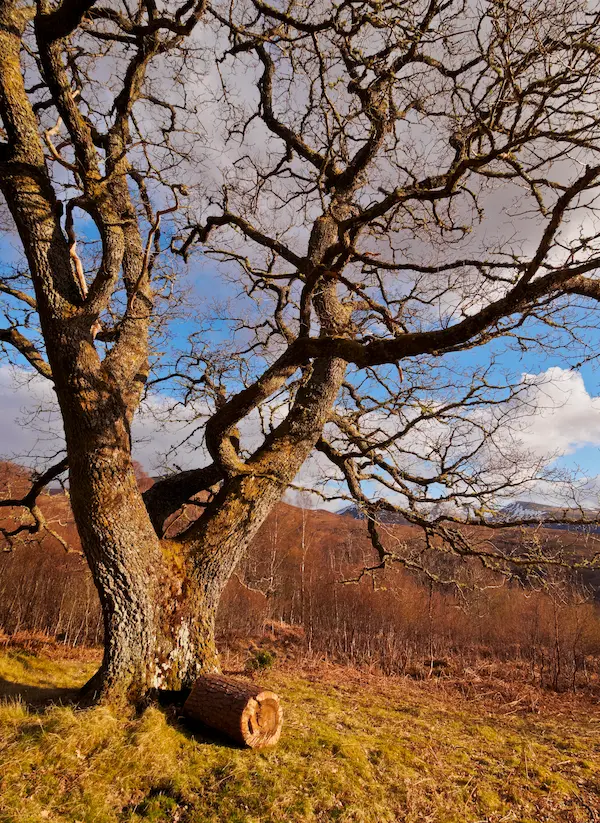
You have a tree that is causing problems. Maybe it is blocking light, dropping branches, growing into a roof, or just looking like it might come down in the next storm. The question most homeowners in Stirling and Central Scotland ask is simple: does it need cutting back, or does it need to come down?
The answer depends on the tree’s health, its location, and what you are trying to achieve. Pruning and felling are very different jobs with different outcomes, costs, and timelines.
When pruning is the right option
Pruning means selectively removing branches to improve the tree’s shape, health, or clearance. The tree stays in place. Done properly, it looks better and grows stronger.
Pruning makes sense when:
- The tree is healthy but overgrown. A mature tree that has not been maintained for years often has a dense canopy that blocks light and catches too much wind. Crown thinning removes 15 to 30 percent of the canopy to let light through and reduce wind resistance.
- Branches are overhanging your house or a neighbour’s property. Crown reduction brings the overall size back without ruining the tree’s shape. This is the most common reason homeowners call a tree surgeon.
- Deadwood is building up. Dead branches fall without warning. Removing them is basic safety, especially if the tree is near a house, path, or road.
- The tree is touching power lines, gutters, or a roof. Clearance pruning creates space between the tree and the structure. This needs to be done carefully to avoid destabilising the tree’s balance.
- You want to improve the view or let more light into the garden. Crown lifting removes the lower branches to raise the canopy. This is often enough to transform a dark, overshadowed garden.
Pruning is generally the better option whenever the tree is structurally sound and in a location where it can stay. A healthy tree adds value to a property and takes decades to replace.
When felling is the right option
Felling means removing the entire tree, usually down to ground level or including the stump. It is permanent and should be a last resort, but sometimes it is the only practical option.
Felling makes sense when:
- The tree is dead or dying. A dead tree is a liability. It will come down eventually, and you have no control over when or where. Removing it safely is always cheaper than dealing with the damage it causes.
- The trunk or root plate is structurally compromised. Visible cracks in the trunk, large cavities, fungal brackets at the base, or roots lifting on one side all indicate serious structural problems. Pruning a structurally unsound tree does not fix the underlying issue.
- The tree is in the wrong place. A tree planted too close to a building, drain, or boundary can cause foundation damage, blocked drains, or neighbour disputes. If the roots are already causing problems, removal may be the only solution.
- Storm damage has left the tree unsafe. A tree that has lost a major limb or split at the trunk during a storm is often beyond saving. Even if it looks like it could recover, the wound creates an entry point for decay that weakens the tree permanently.
- It is a condition of planning permission. Some development or building work requires tree removal. In this case, the local authority may require replacement planting as a condition.
Before felling any tree, check whether it is protected by a Tree Preservation Order (TPO) or is within a conservation area. If it is, you need council approval before any work. Your local authority planning department can confirm this. Our tree services team can advise on this as part of the initial assessment.
What pruning involves
A professional pruning job follows a specific process:
- Assessment of the tree’s health, structure, and what needs to be achieved (light, clearance, safety, shape).
- Access setup. Depending on the tree, this may involve climbing with ropes and harnesses, using a mobile elevated work platform (MEWP), or working from the ground with extended tools.
- Selective branch removal. Cuts are made at specific points to promote healthy regrowth and maintain the tree’s natural shape. Poor cuts (topping, stubbing, or flush cuts) cause long-term damage.
- Site clearance. All cut material is removed. Larger timber can be logged for firewood if you want to keep it.
Most residential pruning jobs take half a day to a full day. Larger or more complex trees may take longer.
What felling involves
Felling a tree in a residential garden is not the same as felling a tree in open woodland. Space is limited, and there are usually structures, fences, and neighbouring properties to protect.
- Assessment and planning. The tree’s lean, weight distribution, and surroundings determine whether it can be felled in one piece (straight felling) or needs to be taken down in sections (sectional felling).
- Sectional dismantling. In most gardens, the tree is climbed and dismantled from the top down. Each section is lowered on ropes to avoid damage below.
- Trunk removal. The main trunk is cut in manageable sections down to ground level.
- Stump treatment or removal. The stump can be ground out below ground level (stump grinding) or treated with a chemical to prevent regrowth. Stump grinding is the faster option and allows you to turf or plant over the area.
- Site clearance. All timber, branches, and debris are removed unless you want to keep the logs.
Felling a medium-sized tree in a garden typically takes a full day including stump grinding and cleanup.
How to decide
If you are not sure which option your tree needs, a site visit from a qualified tree surgeon will give you a clear answer. The key factors are:
- Is the tree healthy? Healthy trees almost always benefit from pruning rather than removal.
- Is the tree in a safe location? A healthy tree in a bad location may still need to come down.
- What is the long-term plan for the space? If you are redesigning the garden or building an extension, factor the tree into the plan early. Our landscaping team can work with the tree services team to plan garden projects around existing trees.
If a tree has been damaged in a storm or you are concerned about safety, do not wait. A damaged tree that looks stable can fail suddenly. Call us and we will assess it promptly.
Book a tree assessment
Four Seasons Stirling provides professional tree services across Stirling, Falkirk, Glasgow, Edinburgh, and Central Scotland. We handle pruning, crown reduction, deadwood removal, tree felling, and stump grinding. If you have decided removal is the right call, see our guide to the best time of year to fell a tree in Scotland.
Call us on 07383 531 328 or get a free quote.